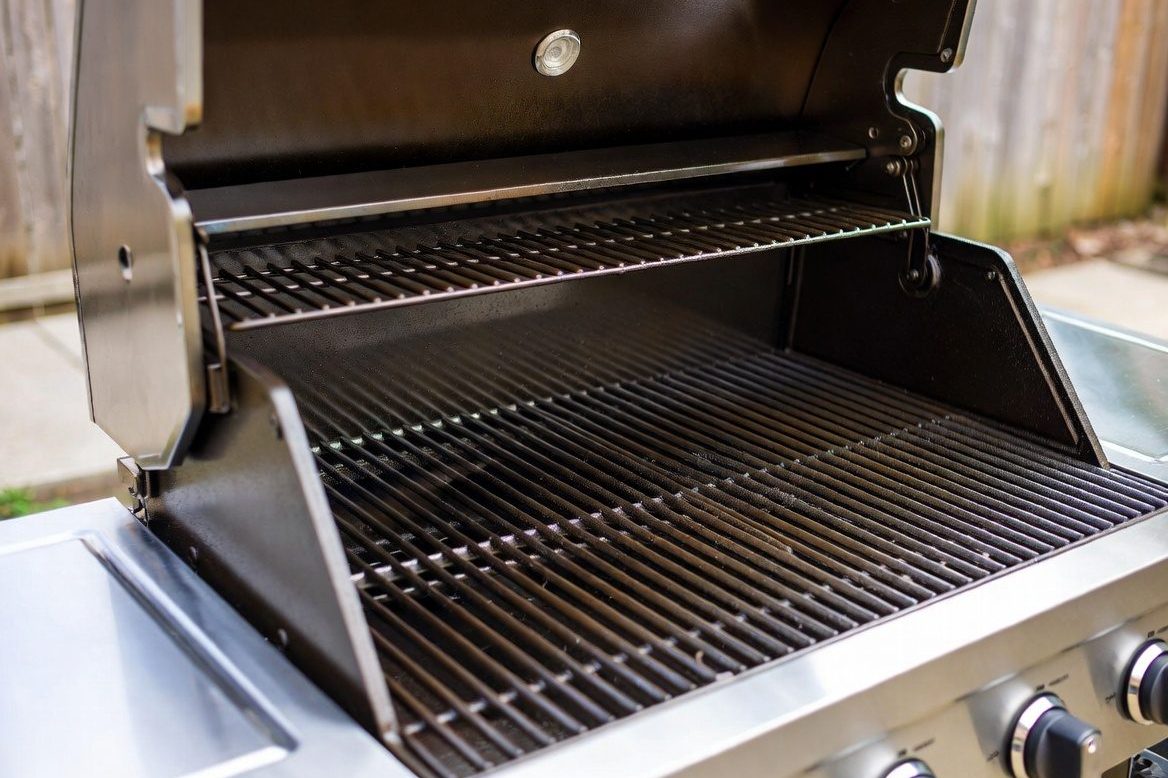
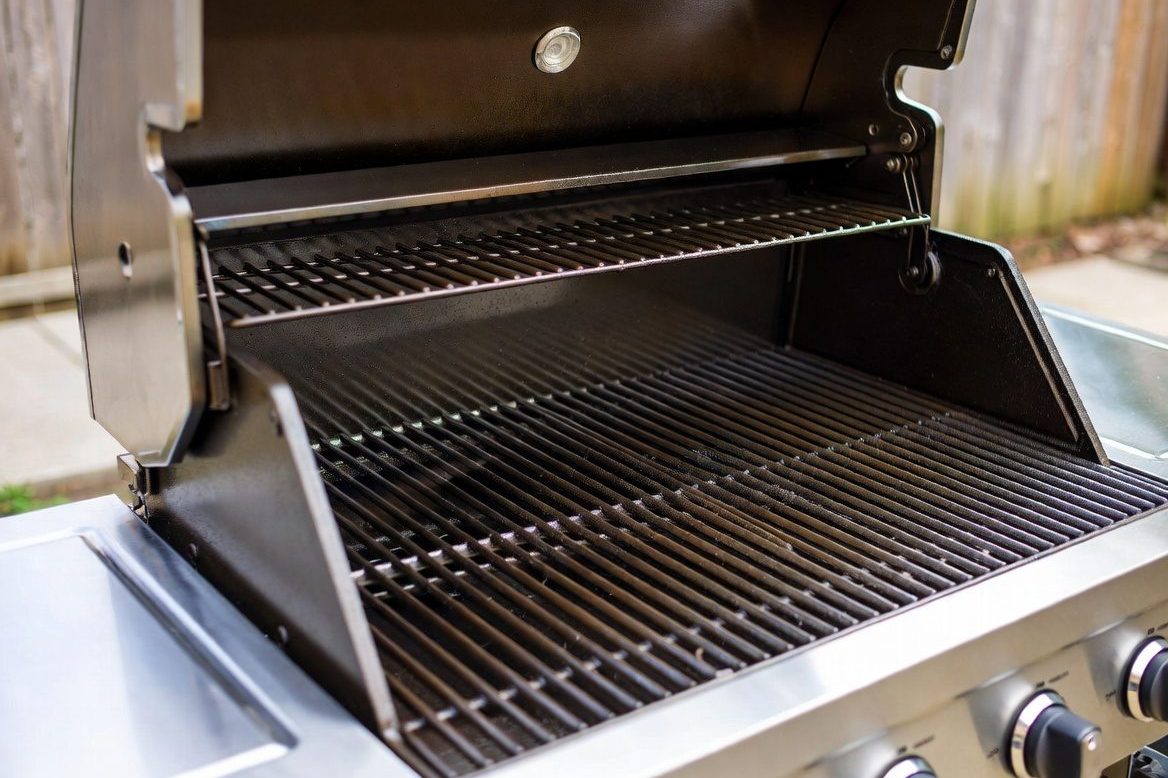
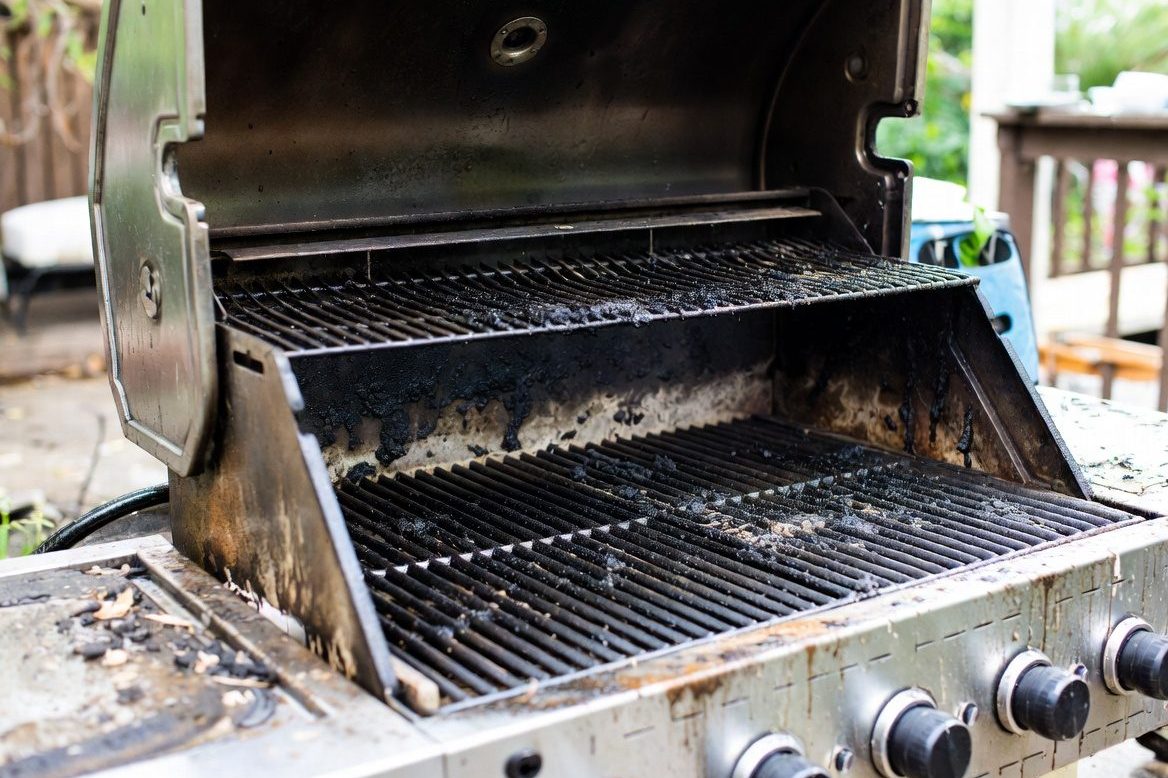
Deck-mounted grills, composite decking and a village full of well-used four-burners — Schaumburg's grill problems are specific.
You get a direct answer to your request, not an automated reply.
Request service availability in Schaumburg. Final serviceability, scope, pricing and scheduling are confirmed after the grill and location are reviewed.
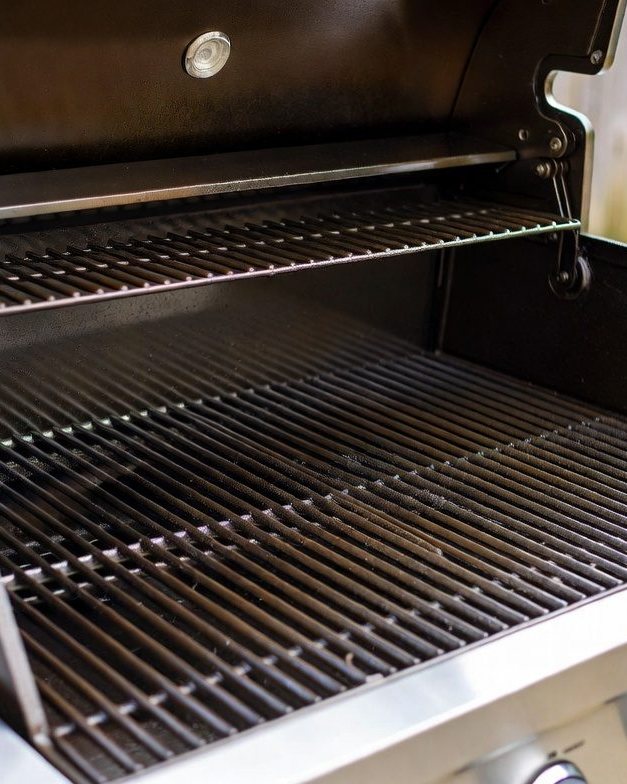
Schaumburg is a village of planned subdivisions, and the housing stock produces a recognisable grill profile: freestanding gas grills, mostly three to five burners, sited on a rear deck or a concrete patio, used hard from May to September and cleaned with a wire brush. Built-in outdoor kitchens exist here but are the exception rather than the rule, and that changes both what the work involves and what it costs.
The deck siting matters more than it sounds. A grill on composite or wood decking sits over a surface that grease has usually already reached, and any cleaning work has to be planned so degreaser and runoff do not make that worse. Composite decking in particular can be marked by the chemistry that cuts baked-on grease, so the work area gets covered and contained before anything is stripped down.
Availability in Schaumburg is confirmed per request rather than assumed. Say what the grill is, how many burners, where it sits and how long since it was last properly cleaned — and you will be told what the work would involve and what it would cost before anything is scheduled.
The season is concentrated and intense. Schaumburg households grill heavily through the warm months and then stop, which means a year's residue accumulates in about five months and then sits over winter without being touched. That pattern produces more baked-on carbon than a lighter, longer season would.
Open subdivisions mean more sun and wind exposure than the wooded northern villages get, so less leaf fall and more UV. Hoods chalk and fade, plastic knobs and side shelves become brittle, and gaskets harden. None of that is dirt, and none of it is fixed by cleaning — but it is often what people are actually unhappy about.
Deck and patio cooking sits close to the house here, with grills frequently under an eave or against siding. That proximity is convenient and it means grease reaches vinyl siding, soffits and deck boards, which is a separate cleaning question from the grill itself and worth asking about explicitly rather than assuming.
Where Schaumburg grill requests most often come from.
Established subdivision homes with rear decks and long-serving four- and five-burner gas grills.
Village-centre homes with compact patios where grills sit close to the house and siding.
Properties backing onto the forest preserve, with more tree debris than the open subdivisions get.
Newer construction with composite decking and builder-specified patio grills.
Townhome and condo patios where compact grills and tight access are the norm.
Family subdivisions with substantial rear gardens and heavily used summer grills.
Deck surface is the local variable. Composite decking, painted wood and sealed concrete each respond differently to grease-cutting chemistry and to runoff, and a grill that has lived on the same three boards for six years usually has a stain problem underneath it. That is worth raising in the request so it gets planned for.
Burner count and grill age carry most of the price. Four- and five-burner cart grills are the bulk of what is here, and the difference between a three-year-old unit cleaned annually and a nine-year-old one never deep-cleaned is hours, not technique.
Sun damage is not dirt. Faded hoods, chalked paint, brittle plastics and hardened gaskets are extremely common on open-subdivision patios and cleaning does not reverse any of them. If that is what is bothering you, it is better to know before spending money than after.
Most Schaumburg grills are ordinary four- and five-burner cart units, and the honest case for a professional clean is not that the work is exotic — it is that almost nobody does it. Taking out the grates and the flavour bars, clearing the cook box floor, and getting into the burner shields is two or three hours of unpleasant work, and it is exactly the part that a summer of brushing never touches.
The deck is the local complication. A grill that has stood on the same composite or wood boards for years sits over a surface grease has already reached, and cleaning it without making that worse means covering and containing the area first. It is a small thing that separates a good job from a new stain.
What it does not fix is worth being blunt about, because on open subdivision patios this comes up constantly: faded hoods, chalked paint, brittle knobs and hardened gaskets are sun and age, not dirt. Cleaning makes the grill cook right. It does not make it look new, and anyone promising otherwise is selling something.
A few of the Schaumburg spots close to the homes and backyards we clean.
Every job is a full teardown and detail — not a quick wipe-down.


Four situations homeowners actually run into. Find yours before you spend money — a deep clean is worth it for some of these and a waste for others.
Flare-ups, greasy smoke, food sticking to the grates, or a thick black crust that a wire brush skates over. The burners still light and the frame is solid — it is dirty, not broken.
Cleaning is usually the right call.
One side runs hot and the other barely warms, the igniter clicks without lighting, or you can see split, rusted-through or blocked burner tubes. A deep clean can reveal this, and sometimes clearing blocked ports helps — but a failed part stays failed once it is clean.
Expect a repair diagnosis, which may be a separate service.
Rust that has gone through the firebox or lid rather than sitting on the surface, a cook box you can flex or push a screwdriver through, or a discontinued model whose parts are no longer made.
Worth comparing the cost of repair against replacement.
Built-in units are set into masonry or cabinetry, so the questions are different: can the unit be pulled for access, where do the gas and power connections run, and what protects the stone, tile or composite surround while work is happening.
Confirm access, utilities and surface protection before scheduling.
Worth knowing before you spend anything — cleaning is not restoration, and it is not repair.
Baked-on grease and carbon on grates, radiants and briquettes, residue in the cook box and firebox, buildup around burner ports, and the film on stainless and enamel exteriors. This is the part that causes flare-ups, off flavours and uneven heat.
Most grills come back cooking noticeably better.
Rust that has eaten through metal, pitting, heat-discoloured or crazed finishes, warped grates and cracked fireboxes are permanent. Cleaning makes them visible and clean; it does not make them new. Burners and igniters that have failed are replacement parts, not dirt.
If that is the situation, you should be told, not sold a clean.
Grill work happens over patios, decks and outdoor-kitchen surfaces. Degreasers and runoff can mark bluestone, limestone, unsealed concrete, composite decking and grout, so the work area should be covered and contained before anything is stripped down. Ask how that will be handled — especially on a built-in unit set into stone.
Confirm surface protection before work starts.
Grill servicing covers the grill and its components. Existing grease or barbecue stains on the surrounding patio, pavers or decking are hardscape cleaning — a different job, usually a different contractor, and normally outside the scope of a grill cleaning. Mention them in your request and you will get a straight answer about whether they are included.
Ask first rather than assume it is covered.
Five simple steps from photo to a spotless, safe grill — we do the messy part.
Text photos of your grill or outdoor kitchen and your suburb. Every request is read and answered directly.
We're fully mobile. We handle the entire job on-site in your driveway or backyard, so you never load a heavy, greasy grill into a car.
We break the grill down and strip grates, burners, the firebox, and the interior of the grease and carbon that daily cleaning leaves behind.
Stainless is restored, everything is reassembled and wiped down, and the grease tray is cleared — put back exactly how it should be.
You get back a safe, even-heating grill that looks and cooks better — often cleaner than the day it left the store.
Sending the form is a request, not a booking. Here is the whole sequence, start to finish.
Type, built-in or freestanding, what it is doing now, and how soon you need it. Photos help but are not required.
If the description leaves the scope unclear, you may be asked for a couple of pictures — usually a wide shot and one of the grill open.
Your request is read by a grill-care professional who checks it is serviceable and in the area covered.
You are contacted directly with what the work involves, what it costs and when it could happen. Nothing is booked before this.
No obligation at any point. If it turns out to be a repair or a replacement question instead, you should be told that plainly.
Skip the worst chore in the backyard. We handle the grease so you don't have to.
Built-up grease is the leading cause of grill fires. We remove every bit of it.
Removing years of carbon buildup restores even heat and better cooking performance — and protects your investment so your grill lasts longer.
Grill cleaning across the western suburbs. Explore a nearby town or see every area we cover.
Professional grill cleaning commonly costs several hundred dollars, and what a particular grill costs depends on things nobody can judge from a description alone.
The single biggest factor. A two-burner cart and a six-burner built-in hold very different amounts of surface area, and every grate, radiant and burner is cleaned individually.
A freestanding grill can be worked on where it stands. A built-in is set into masonry or cabinetry, may need drawing out for access, and the surround has to be protected throughout — more time, and more care.
One neglected season and eight of them are not the same job. Heavy carbon crust has to be worked off in stages, and that is time rather than technique.
Some models drop their grates and radiants out in a minute. Others need panels, heat shields or burner assemblies removed to reach what actually needs cleaning.
Pellet grills, kamados and offset smokers are built differently and hold residue in different places. They are quoted on what they are, not on a generic grill rate.
If components look failed rather than dirty, that changes the conversation before it changes the price — see the cleaning-or-repair guide.
Travel within the service area is part of the job. A location that has to be checked for serviceability first is confirmed before anything is quoted.
Yes, and the decking is part of the planning rather than an afterthought. Composite can be marked by the chemistry that cuts baked-on grease, so the area under and around the grill is covered and runoff contained before anything comes apart. Mention the deck material in your request so it is planned for.
Schaumburg is part of the developing northern service area, so availability is confirmed per request rather than assumed. The form is how it gets checked — you will be told plainly whether the location can be serviced, what the scope is and what it costs before anything is scheduled.
That is deck or patio cleaning, not grill cleaning — different chemistry, different job, and normally a different contractor. It is genuinely outside the scope of a grill service, so it is better to say so than to let you assume it is included. Raise it in your request and you will get a straight answer about whether anything can be done.
Cleaning will not fix either. Fading, chalking and brittle plastics are UV and age damage rather than dirt, and they are very common on open subdivision patios. A clean will make the grill cook better and look cleaner; it will not make it look new, and pretending otherwise wastes your money.
Professional grill cleaning commonly runs to several hundred dollars. For a standard four-burner, the things that move the number are how long since the last deep clean, how much carbon has built up, and whether anything looks failed rather than dirty. A photo with the lid open and the grates out answers most of that.
Most grills take 1.5 to 2.5 hours depending on size and buildup. Built-in grills and outdoor kitchens take a bit longer — we'll give you an estimate with your quote.
Not necessarily — as long as we can access your grill. Many customers leave it open for us and pay by a secure link. Just let us know your preference.
Photos and a description of the condition are enough to come back to you with scope, price and timing.
The more you can describe the grill and its condition, the more accurately it can be quoted — and the fewer back-and-forth messages before you get an answer.
Chicagoland Grill Cleaning helps homeowners document their grill’s condition and connect with an available local grill-care professional. Submitting this form sends a request — it is not a confirmed booking. The professional who picks it up confirms scope, pricing and availability with you directly before any work happens.
Send us photos and we'll provide a fast quote — no pressure, no obligation.
Get a Fast Quote