Chicago, Cook County

Grill Cleaning in Chicago, IL

City grilling is its own problem: shared roof decks, tight rear porches, coach houses and courtyards, and building rules that vary from address to address.

You get a direct answer to your request, not an automated reply.

Availability Confirmed Per Request Grill cleaning & condition documentation Scope and price agreed before any work

Request service availability in Chicago. Final serviceability, scope, pricing and scheduling are confirmed after the grill and location are reviewed.
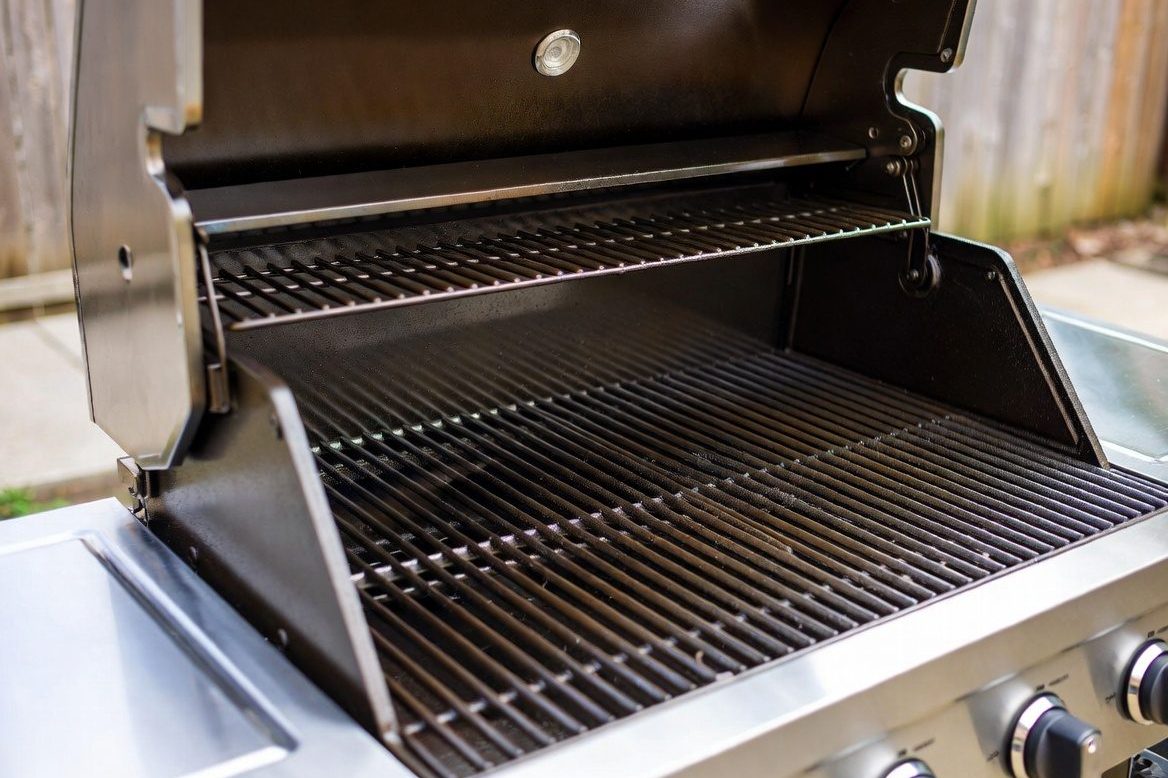
Freshly cleaned stainless steel gas grill after a Chicago grill cleaning
On-site in Chicago
Cleaned where it stands — no drop-off
Local Grill Cleaning

Grill & Outdoor Kitchen Cleaning for Chicago Properties

Grilling in the city is not a smaller version of grilling in the suburbs. The grill is more likely to be on a rear porch, a shared roof deck, a garage-top deck, a courtyard or a coach-house patio than on an open lawn, and getting to it may involve a walk-up, a shared entrance, a building key or a property manager. Those are the constraints that decide whether a job is straightforward, not the grill itself.

The equipment skews differently too. Compact and portable gas grills, kamados and charcoal units are far more common than six-burner carts, and buildings with shared amenity decks often have one or two large grills that get very heavy use from many households and correspondingly heavy buildup. Multi-unit and property-managed situations are a genuinely different conversation from a single homeowner's patio, and the request form lets you say which you are.

This is the developing part of the service area. Chicagoland Grill Cleaning's established coverage is the western suburbs, so availability inside the city is confirmed per request rather than assumed. Sending the form is how it gets checked: describe the grill, the location and the access, and you get a plain answer on whether it can be serviced, what the scope would be and what it would cost, before anything is scheduled.

Backyard Season

What Makes City Grilling Different

Space is the first constraint. A grill on a rear porch or a small courtyard sits close to walls, railings and siding, so grease reaches surrounding surfaces far more readily than it does in an open yard, and the work area needs covering and containing before anything is opened. On a shared deck there is the additional question of who else uses the space and when.

Access is the second. Walk-ups, shared entrances, freight elevators, roof hatches, building keys and scheduled access windows all shape what is possible and when. On a managed building it may be the property manager rather than the resident who arranges entry. None of this is unusual; it just has to be planned rather than discovered on the day.

Rules are the third, and they genuinely vary. Whether a grill may be used at all — and whether charcoal is permitted — can depend on your building, your lease or condo declaration, your association, and applicable city requirements. We do not interpret those rules and this page states none of them. Check with your building management or association, and with the City of Chicago and the Chicago Fire Department, before assuming grilling is permitted where you live. Cleaning an existing grill is a maintenance service, not a determination that its use is allowed.

Neighborhoods

Chicago Property Types We Get Requests From

The situations that come up most often inside the city, and what each one changes about the job.

Single-family homes with rear yards

The closest to a suburban job. Access is usually straightforward through a gangway or rear gate.

Two- and three-flats

Rear porches and small yards, often with a shared entrance and more than one household using the space.

Condo buildings with shared roof decks

One or two heavily used grills serving many residents. Usually arranged through the association or property manager.

Garage-top and rear decks

Common on newer construction. Access can involve stairs and a tight working area.

Coach houses & courtyard buildings

Compact outdoor spaces close to structures, where surface protection matters more than usual.

Apartment communities with amenity grills

Multiple units, scheduled access, and a single site contact. Quoted as a site, not as one grill.

Why It Matters

What We Need to Know for a Chicago Request

Where the grill actually is, and how it is reached. Rear porch, roof deck, courtyard, garage-top, ground-level yard — and whether reaching it involves stairs, a shared entrance, a key or a scheduled access window. This is the single biggest factor inside the city and the one most often left out of a request.

Whether it is yours alone or shared. A single household's grill and a shared amenity grill used by twenty units are different jobs with different buildup and different scheduling. If a property manager or association is involved, say so — it usually makes arranging the visit easier, not harder.

What is around it. Grease reaches walls, railings, siding, decking and pavers far more readily in a tight city space, so the work area is covered and runoff contained before anything is opened. Tell us what the surfaces are — composite decking, wood, brick, pavers — so it is planned for.

Grill type and fuel. Compact gas grills, kamados, charcoal units and portable models are all common in the city and are cleaned differently. Note that whether a particular fuel may be used at your address is a question for your building and the city, not one this service answers.

Good to Know

Why Homeowners in Chicago Hire a Grill Cleaning Service

In the city the case for bringing someone in is mostly about space and containment. A grill on a rear porch, a courtyard or a roof deck sits close to walls, railings, siding and decking, and a DIY degreasing in that setting is how grease and runoff end up on surfaces that are expensive to put right. The work area gets covered and contained first, which is the part most people skip.

Shared grills are the other case, and a stronger one. An amenity grill on a condo roof deck serving twenty households accumulates buildup at a rate no domestic grill approaches, and nobody in the building owns the job of taking it apart. That is a genuine gap, and it is quoted as a site rather than as one unit.

Two honest limits. First, availability inside the city is confirmed per request — the established service area is the western suburbs, and a request is how coverage gets checked rather than assumed. Second, cleaning is maintenance: it does not determine whether grilling is permitted at your address, and it does not reverse corrosion, damaged finishes or failed components.

Around Town

Nearby Landmarks We Work Around in Chicago

A few of the Chicago spots close to the homes and backyards we clean.

The lakefront Lincoln Park Humboldt Park The 606 Garfield Park Conservatory Jackson Park
About availability in Chicago: this is part of the developing northern service area. Sending a request is how availability is checked — the grill and the location are reviewed, and you are told plainly whether it can be serviced, what the scope would be and what it would cost, before anything is scheduled. No appointment is held or implied by sending a request.
What's Included

A Complete, Hands-On Restoration

Every job is a full teardown and detail — not a quick wipe-down.

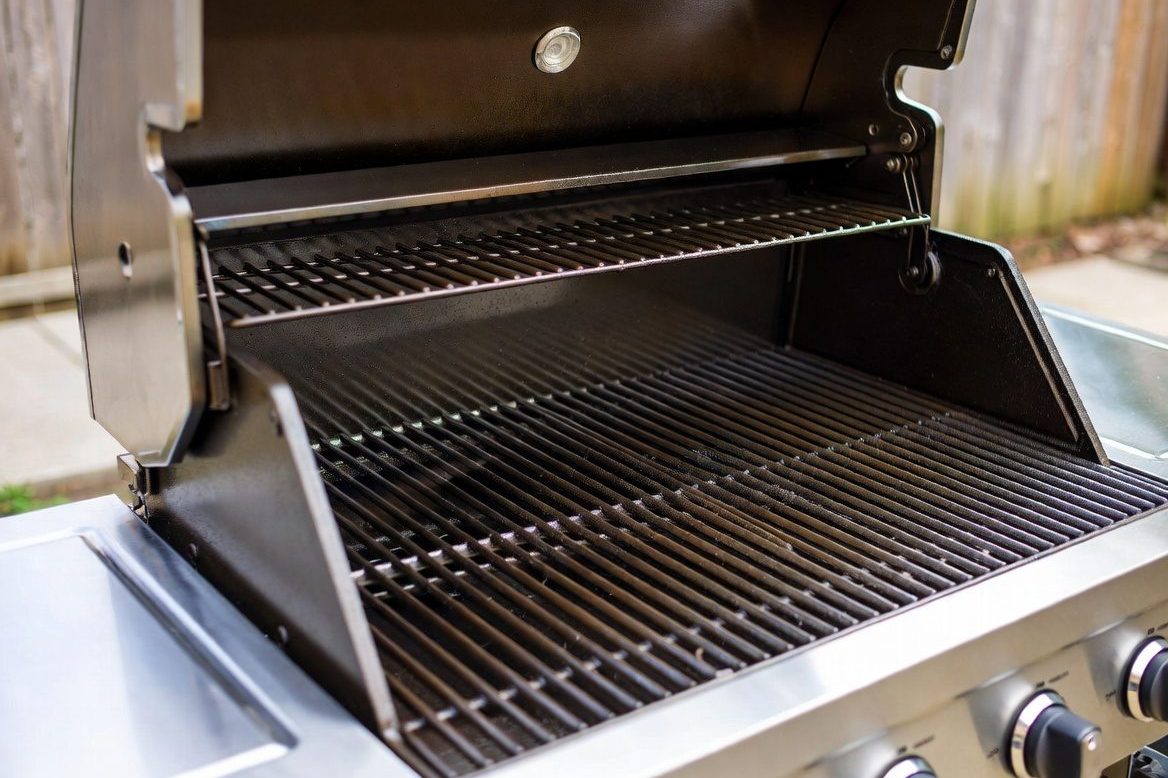
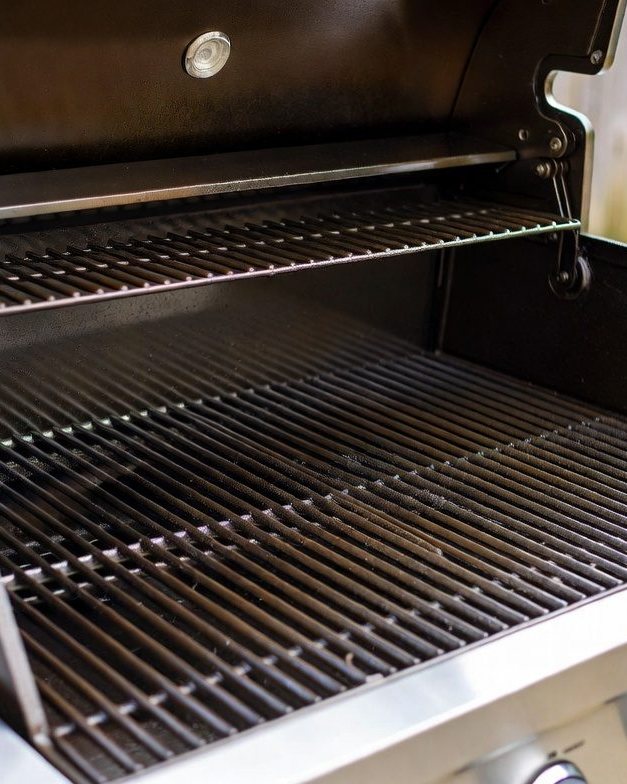
Clean grill grates close up

Deep Grill Cleaning

  • Grates cleaned & degreased
  • Burners inspected
  • Interior fully degreased
Polished stainless steel grill exterior

Exterior Restoration

  • Stainless steel polishing
  • Surface restoration
  • Detail cleaning
Grill interior being restored

Outdoor Kitchen Cleaning

  • Cabinets
  • Countertops
  • Surrounding surfaces
Work Out What You Need

Cleaning, Repair or Replacement for Your Chicago Grill?

Four situations homeowners actually run into. Find yours before you spend money — a deep clean is worth it for some of these and a waste for others.

1Grease, smoke and carbon buildup

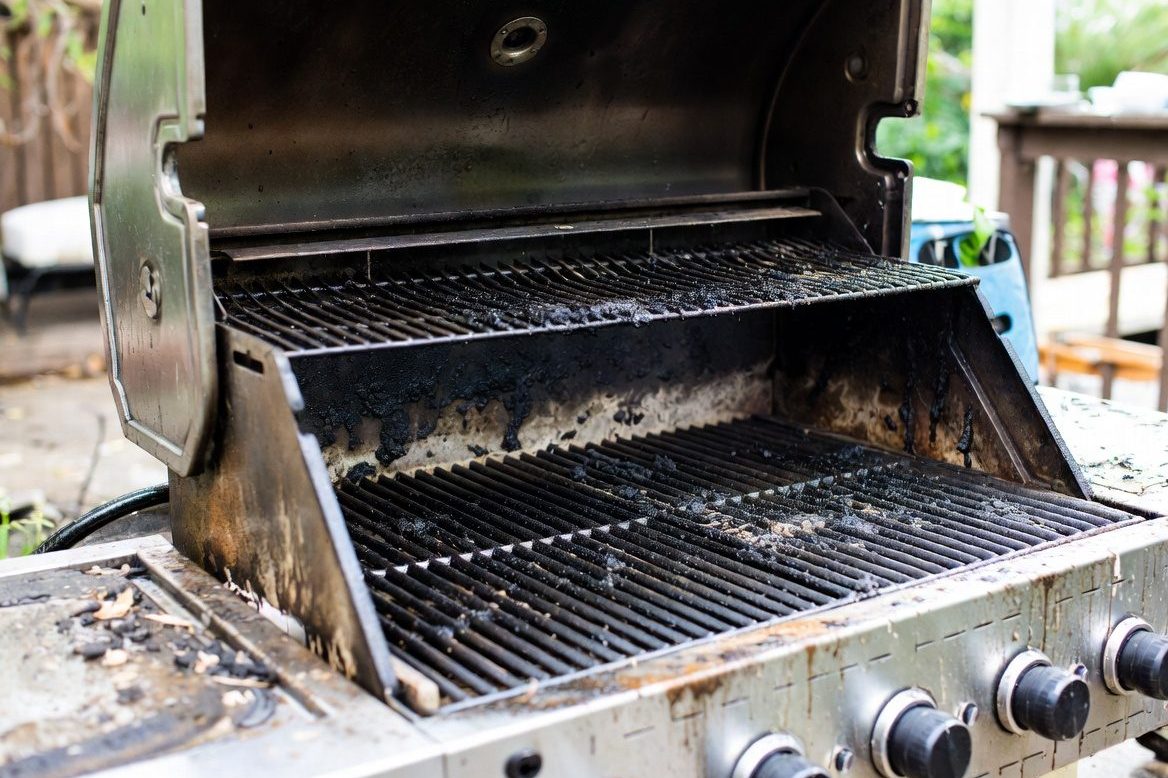
Flare-ups, greasy smoke, food sticking to the grates, or a thick black crust that a wire brush skates over. The burners still light and the frame is solid — it is dirty, not broken.

Cleaning is usually the right call.

2Uneven flame, ignition trouble or damaged burners

One side runs hot and the other barely warms, the igniter clicks without lighting, or you can see split, rusted-through or blocked burner tubes. A deep clean can reveal this, and sometimes clearing blocked ports helps — but a failed part stays failed once it is clean.

Expect a repair diagnosis, which may be a separate service.

3Advanced corrosion or structural damage

Rust that has gone through the firebox or lid rather than sitting on the surface, a cook box you can flex or push a screwdriver through, or a discontinued model whose parts are no longer made.

Worth comparing the cost of repair against replacement.

4Built-in and outdoor-kitchen grills

Built-in units are set into masonry or cabinetry, so the questions are different: can the unit be pulled for access, where do the gas and power connections run, and what protects the stone, tile or composite surround while work is happening.

Confirm access, utilities and surface protection before scheduling.

This is general guidance to help you decide what to ask for — it is not a diagnosis, and nothing here can be confirmed without seeing the grill. Read the longer version →
Straight Answers

What a Deep Clean Can and Cannot Do

Worth knowing before you spend anything — cleaning is not restoration, and it is not repair.

What it removes

Baked-on grease and carbon on grates, radiants and briquettes, residue in the cook box and firebox, buildup around burner ports, and the film on stainless and enamel exteriors. This is the part that causes flare-ups, off flavours and uneven heat.

Most grills come back cooking noticeably better.

What it cannot undo

Rust that has eaten through metal, pitting, heat-discoloured or crazed finishes, warped grates and cracked fireboxes are permanent. Cleaning makes them visible and clean; it does not make them new. Burners and igniters that have failed are replacement parts, not dirt.

If that is the situation, you should be told, not sold a clean.

Protecting what is around it

Grill work happens over patios, decks and outdoor-kitchen surfaces. Degreasers and runoff can mark bluestone, limestone, unsealed concrete, composite decking and grout, so the work area should be covered and contained before anything is stripped down. Ask how that will be handled — especially on a built-in unit set into stone.

Confirm surface protection before work starts.

?Stains already on the patio

Grill servicing covers the grill and its components. Existing grease or barbecue stains on the surrounding patio, pavers or decking are hardscape cleaning — a different job, usually a different contractor, and normally outside the scope of a grill cleaning. Mention them in your request and you will get a straight answer about whether they are included.

Ask first rather than assume it is covered.

Want to check your own grill before deciding? The free grill cleaning & safety checklist walks through what to inspect, and where to stop and call someone qualified.
How It Works

How Our Deep Clean Works

Five simple steps from photo to a spotless, safe grill — we do the messy part.

1

Send a Few Photos

Text photos of your grill or outdoor kitchen and your suburb. Every request is read and answered directly.

2

We Come to You

We're fully mobile. We handle the entire job on-site in your driveway or backyard, so you never load a heavy, greasy grill into a car.

3

Full Teardown & Degrease

We break the grill down and strip grates, burners, the firebox, and the interior of the grease and carbon that daily cleaning leaves behind.

4

Restore & Reassemble

Stainless is restored, everything is reassembled and wiped down, and the grease tray is cleared — put back exactly how it should be.

5

Ready to Cook

You get back a safe, even-heating grill that looks and cooks better — often cleaner than the day it left the store.

After You Send a Request

What Happens Next

Sending the form is a request, not a booking. Here is the whole sequence, start to finish.

1

You describe the grill

Type, built-in or freestanding, what it is doing now, and how soon you need it. Photos help but are not required.

2

Photos may be requested

If the description leaves the scope unclear, you may be asked for a couple of pictures — usually a wide shot and one of the grill open.

3

An available professional reviews it

Your request is read by a grill-care professional who checks it is serviceable and in the area covered.

4

Scope, pricing and timing are confirmed

You are contacted directly with what the work involves, what it costs and when it could happen. Nothing is booked before this.

5

You decide whether to go ahead

No obligation at any point. If it turns out to be a repair or a replacement question instead, you should be told that plainly.

What a request does not do: it does not hold a slot, confirm a price, or guarantee that a professional is available for your date. All three are settled in the conversation that follows.
The Payoff

Why Chicago Homeowners Call Us

Save Hours of Scrubbing

Skip the worst chore in the backyard. We handle the grease so you don't have to.

Avoid Grease Fires

Built-up grease is the leading cause of grill fires. We remove every bit of it.

Cook Better & Extend Its Life

Removing years of carbon buildup restores even heat and better cooking performance — and protects your investment so your grill lasts longer.

Nearby Towns

We Also Serve Communities Near Chicago

Grill cleaning across the western suburbs. Explore a nearby town or see every area we cover.

What It Costs

What Drives the Price

Professional grill cleaning commonly costs several hundred dollars, and what a particular grill costs depends on things nobody can judge from a description alone.

1Width and burner count

The single biggest factor. A two-burner cart and a six-burner built-in hold very different amounts of surface area, and every grate, radiant and burner is cleaned individually.

2Freestanding or built-in

A freestanding grill can be worked on where it stands. A built-in is set into masonry or cabinetry, may need drawing out for access, and the surround has to be protected throughout — more time, and more care.

3How much grease and carbon has built up

One neglected season and eight of them are not the same job. Heavy carbon crust has to be worked off in stages, and that is time rather than technique.

4Access and how far it comes apart

Some models drop their grates and radiants out in a minute. Others need panels, heat shields or burner assemblies removed to reach what actually needs cleaning.

5Smokers and specialty configurations

Pellet grills, kamados and offset smokers are built differently and hold residue in different places. They are quoted on what they are, not on a generic grill rate.

6Rust, deterioration or a suspected fault

If components look failed rather than dirty, that changes the conversation before it changes the price — see the cleaning-or-repair guide.

7Where the grill is

Travel within the service area is part of the job. A location that has to be checked for serviceability first is confirmed before anything is quoted.

Cleaning is priced separately from repairs. Cleaning is quoted separately from parts, repairs and diagnostic work. A cleaning quote covers cleaning. If something turns out to be broken rather than dirty, that is a separate conversation with a separate price — and gas, electrical and ignition-system repairs are outside the scope of a cleaning service entirely.
Send the grill type, rough size, how long since it was last deep-cleaned and a photo or two, and you can be quoted on what you actually have rather than on an average. The full cost guide walks through it →
Good to Know

Chicago Grill Cleaning FAQs

The city is part of the developing service area rather than the established western-suburb footprint, so availability is confirmed per request rather than assumed. Sending the form is how it gets checked — the grill, the location and the access are reviewed, and you are told plainly whether it can be serviced and on what terms before anything is scheduled. No appointment is held or implied by sending a request.

That is not a question this service can answer for you, and this page deliberately does not try. Whether grilling is permitted — and whether charcoal specifically is permitted — can depend on your building, your lease or condo declaration, your association rules, and applicable city requirements. Check with your building management or association, and with the City of Chicago and the Chicago Fire Department. Cleaning an existing grill is maintenance; it is not a determination that its use is allowed.

Yes, and it is often the simplest way to do it. Shared amenity grills are quoted as a site rather than as a single unit: the number of grills, their type and condition, access arrangements and a site contact are what shape the scope. Choose the commercial path on the request form and include the unit or grill count.

Not harder, but it needs planning. Roof-deck access, whether there is a freight elevator or a hatch, when the space can be taken out of use, and who arranges entry all have to be settled before a visit rather than on the day. Say so in the request and it gets scoped properly.

Both are within the cleaning scope. Charcoal units and ceramic kamados are cleaned differently from gas — ash management, gasket condition and ceramic handling matter more than burner ports — so say which you have. Whether charcoal use is permitted at your address is, again, a question for your building and the city.

Professional grill cleaning commonly runs to several hundred dollars, and access is a bigger factor inside the city than it is in the suburbs. A compact grill on a ground-floor patio and a large shared grill up three flights are not the same job. Send the grill type, rough size, where it sits and how it is reached, and you will get a real figure rather than a range.

Most grills take 1.5 to 2.5 hours depending on size and buildup. Built-in grills and outdoor kitchens take a bit longer — we'll give you an estimate with your quote.

Not necessarily — as long as we can access your grill. Many customers leave it open for us and pay by a secure link. Just let us know your preference.

Photos and a description of the condition are enough to come back to you with scope, price and timing.

Two Minutes, No Pressure

Tell Us About Your Chicago Grill

The more you can describe the grill and its condition, the more accurately it can be quoted — and the fewer back-and-forth messages before you get an answer.

  • Describe the grill once — type, size, condition
  • Add photos now, or send them after the first call
  • Mobile Service — scope and price confirmed before any work
  • Not sure whether you need cleaning or repair? Work through it here first →

Chicagoland Grill Cleaning helps homeowners document their grill’s condition and connect with an available local grill-care professional. Submitting this form sends a request — it is not a confirmed booking. The professional who picks it up confirms scope, pricing and availability with you directly before any work happens.

Add grill details optional — helps quote it accurately
Tap to add up to 2 photos

Up to 2 photos, 5MB each. A wide shot plus one of the open grill is usually enough. You can also send photos after the first call instead.

Availability is not guaranteed. Cleaning removes grease and carbon — it cannot reverse rust-through, pitted or discoloured finishes, or failed burners and igniters. Anything that turns out to be a repair may need separate diagnosis. Your details are shared only as described above.

Prefer to talk? Call or text (630) 423-6164

Ready to Restore Your Chicago Grill?

Send us photos and we'll provide a fast quote — no pressure, no obligation.

Get a Fast Quote
CallGet a Quote